

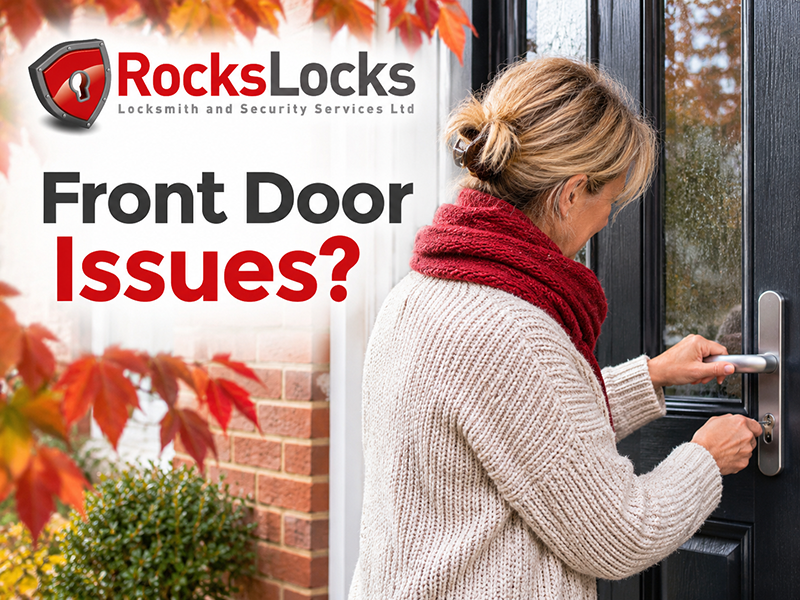
Autumn Door and Lock Problems: What to Watch For
We’ve enjoyed some lovely hot temperatures this summer, but the change in seasons is now becoming difficult to ignore. As autumn arrives, we’re starting to see cooler mornings, heavier rain, damp conditions and bigger temperature changes throughout the day.
While we might be reaching for warmer clothes and putting the summer furniture away, it’s also worth thinking about how these changing conditions affect our doors, windows and locks.
Autumn can be a time when small issues start to appear. A door that closed perfectly well in summer might suddenly stick, a lock may become harder to operate or a uPVC door might need a little more effort to secure. Understanding why these things happen can help prevent minor problems from becoming bigger repairs as winter approaches.
How Changing Autumn Weather Affects Your Doors and Locks
1. Increased Moisture Can Affect Timber Doors
One of the biggest changes as we move into autumn is the increase in moisture in the air. Rain, damp mornings and higher humidity can all affect natural materials, particularly timber.
Wood naturally absorbs and releases moisture depending on its surroundings. As humidity increases, timber can absorb moisture and expand slightly. This movement can affect how a wooden door sits within its frame.
You might start to notice:
- A front or back door becoming harder to close.
- The door catching against the frame or threshold.
- A lock or latch no longer lining up quite as easily.
- Changes in how tightly the door fits when closed.
These issues don’t necessarily mean the door needs replacing. Sometimes the problem is related to seasonal movement or an existing alignment issue that has become more noticeable.
2. Damp Conditions Can Affect Lock Mechanisms
Locks are exposed to the elements every time we use an external door. During autumn, repeated exposure to rain, moisture and damp air can contribute to corrosion, dirt build-up and problems with moving components, particularly where a lock is already worn or poorly maintained.
You may notice that your key doesn’t turn as smoothly as it used to, the handle feels stiff or the locking mechanism requires more effort to operate.
It’s important not to ignore these early warning signs. Forcing a key or repeatedly struggling with a stiff lock can cause further damage, potentially leaving you with a broken key or a lock that no longer works.
Are Your uPVC Doors Becoming Harder to Close?
uPVC doors are designed to provide a secure and weather-resistant entrance, but their hinges, locking points and alignment can still need attention over time.
Changes in temperature, everyday use and movement within the door assembly can contribute to alignment problems. As autumn conditions set in, you may become more aware of an issue that was already developing.
Common signs include:
- Having to lift or push the handle harder to lock the door.
- The door catching against the frame.
- The locking points failing to engage smoothly.
- Noticeable draughts around the door.
- The door feeling loose or sitting unevenly when closed.
If your uPVC door isn’t locking properly, don’t assume the whole door or frame needs replacing. In many cases, the problem may be down to adjustment, hinges or the locking mechanism itself.
At Rocks Locks, we can assess the cause and advise whether a repair or realignment is possible.
Autumn Is a Good Time to Spot Problems Before Winter
It’s tempting to wait until something actually stops working before arranging a repair. However, autumn provides a useful opportunity to deal with minor door and lock problems before colder conditions arrive.
A lock that’s already stiff or a door that’s becoming difficult to close may become increasingly troublesome as temperatures fall. Addressing the underlying problem early can help avoid an unexpected lock failure or emergency call-out during the winter months.
It’s worth paying attention to a few simple warning signs:
- Stiff locks: Keys or handles becoming increasingly difficult to operate.
- Misaligned doors: Doors catching on the frame or needing extra pressure to close.
- Loose handles: Handles that feel wobbly or don’t operate the locking mechanism properly.
- Visible moisture: Signs of water ingress or deterioration around external doors and windows.
- Draughts: Changes in the way doors and windows fit or seal.
If you notice any of these problems, it’s worth having them investigated rather than waiting for the mechanism to fail completely.
Need Help With Sticking Doors or Stiff Locks?
At Rocks Locks, Stuart can help diagnose and resolve a range of common door, window and lock problems across Camberley, Sandhurst, Farnborough, Yateley and surrounding areas.
Whether your timber door has become difficult to close, your uPVC door needs realigning or a lock is becoming stiff, getting the problem checked early can help prevent further damage.
Rocks Locks offers:
- Lock repairs and replacements.
- uPVC door and window repairs.
- Timber door adjustments and advice.
- Door and window lock repairs.
- Double glazing repairs and glass unit replacement.
- Emergency locksmith services, available 24/7.
Checkatrade Approved with a 9.95/10 rating | Fully insured | No call-out fee.
Don’t wait until a stiff lock or sticking door becomes an emergency. If you’ve noticed changes in how your doors or locks are working, contact Stuart at Rocks Locks on 07900 335525 for advice or to arrange a repair.